
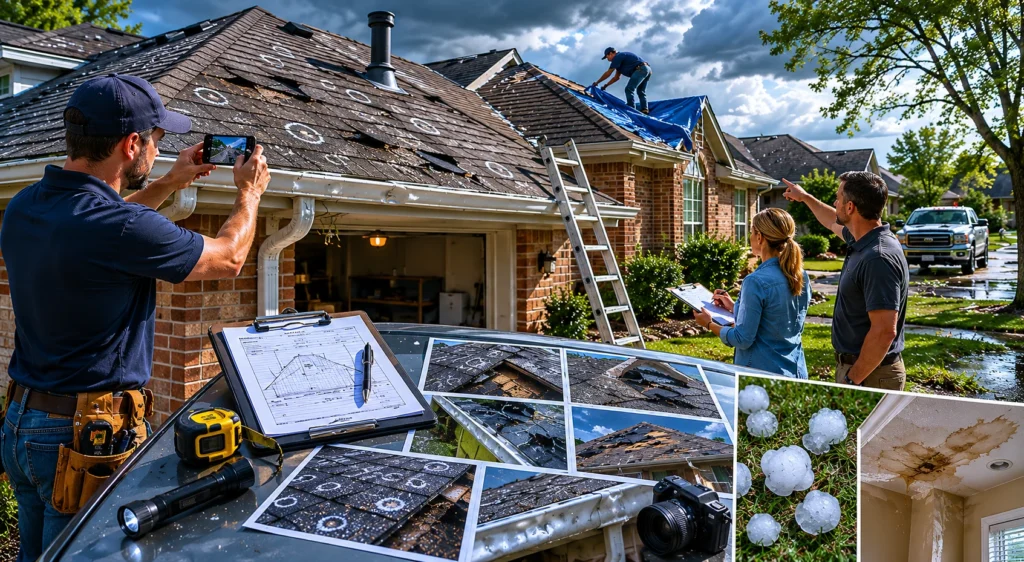
Hailstorms hit fast in North Texas. One afternoon the sky looks harmless. Thirty minutes later, shingles are bruised, gutters are dented, and homeowners are staring at water stains spreading across their ceilings. That is exactly why understanding public adjuster vs. insurance adjuster for hail claims in Grand Prairie, TX matters so much before claim problems begin. Because once the claim process starts, things move quickly. Insurance companies send adjusters. Roofing contractors begin knocking on doors. Estimates start arriving. Homeowners get overwhelmed. And somewhere in the middle of all that chaos, important damage sometimes gets missed.
I have seen homeowners assume the insurance company adjuster automatically handles everything in their best interest. Sometimes that works out fine. Sometimes it absolutely does not. The truth is simple. Public adjusters and insurance adjusters serve very different roles during hail claims. Understanding those differences can dramatically affect your final settlement, your repair quality, and even how stressful the entire process becomes. If you own property in Grand Prairie, TX, this guide will help you understand how each side operates, where disputes commonly happen, and when hiring additional representation may actually make financial sense.
Why Hail Claims Are So Common in North Texas
Grand Prairie sits directly inside one of the most active hail regions in the country. Spring and early summer storms regularly produce damaging hail combined with strong wind systems. And not all hail damage looks dramatic.
That is where many homeowners get caught off guard. Some hail impacts create obvious destruction. Others quietly weaken roofing systems over time. Granules loosen. Seal strips weaken. Flashing bends slightly. Moisture slowly enters vulnerable areas weeks later. The roof may appear “mostly fine” from the ground while serious problems develop underneath.
Common hail-related damage includes:
- Asphalt shingle bruising
- Granule loss
- Cracked tile roofing
- Metal flashing dents
- Damaged ridge vents
- Gutter impacts
- HVAC fin damage
- Window screen tears
- Interior moisture staining
The challenge is that many of these issues require trained inspection experience to properly identify. That is where the adjuster battle often begins.
Understanding the Insurance Claim Process After a Hailstorm
Most hail claims follow a similar timeline.
| Step | What Happens |
| Storm Occurs | Property sustains possible hail damage |
| Claim Filed | Homeowner contacts insurance carrier |
| Inspection Scheduled | Insurance adjuster visits property |
| Estimate Prepared | Carrier calculates repair costs |
| Settlement Issued | Payment offer is made |
| Repairs Begin | Contractor completes repairs |
| Supplements Submitted | Additional hidden damage may be discovered |
Sounds straightforward. But real-world hail claims rarely stay simple for long.
Disputes develop over:
- Scope of damage
- Repair methods
- Roof replacement necessity
- Code upgrades
- Matching materials
- Supplemental repairs
- Labor pricing
- Depreciation calculations
And this is exactly where the conversation around public adjuster vs. insurance adjuster for hail claims in Grand Prairie, TX becomes critically important.
What Does an Insurance Adjuster Actually Do?
An insurance adjuster represents the insurance company. That does not automatically make them dishonest or unfair. Many insurance adjusters work hard and try to handle claims professionally. But homeowners need to clearly understand who the adjuster works for. The insurance company hires them. Their job is to inspect damage, interpret policy coverage, and determine what the carrier believes should be paid under the policy terms.
Their responsibilities typically include:
- Inspecting the property
- Taking photos
- Measuring roof areas
- Reviewing policy coverage
- Preparing estimates
- Determining repair scope
- Explaining settlement decisions
There are generally two types of insurance adjusters involved in hail claims.
Staff Adjusters
These adjusters work directly for the insurance carrier as employees. They handle claims year-round and usually follow company-specific guidelines very closely.
Independent Adjusters
These are third-party adjusters hired during major storm events when carriers become overwhelmed with claims. After large hailstorms in Texas, independent adjusters often flood into the area to help manage volume. That high claim volume matters more than most homeowners realize. When storms produce thousands of claims across the Dallas-Fort Worth area, inspections sometimes become rushed. Adjusters may only spend limited time on each property. Some inspections become extremely surface-level. That can create problems later.
Common Limitations Homeowners Face With Insurance Adjusters
Not every issue comes from bad intentions. Sometimes the biggest issue is simply time pressure. After severe storms, adjusters may inspect multiple homes every single day. That creates an environment where smaller details can get overlooked. Common homeowner complaints include:
Brief Roof Inspections
Some inspections last surprisingly little time. Complex roofing systems often require careful evaluation from multiple angles. Quick walk-throughs increase the chance of missed damage.
Incomplete Roof Measurements
Roof geometry affects claim value enormously. Steep slopes, multiple facets, detached structures, flashing details, and ventilation components all impact estimating accuracy. Small measuring errors can create thousands of dollars in estimate differences.
Missed Supplemental Damage
Certain damage only becomes visible once repairs begin.
Examples include:
- Underlayment damage
- Rotten decking
- Moisture intrusion
- Ventilation deficiencies
- Improper flashing installation
These items may not appear during the initial inspection.
Code Upgrade Issues
Texas building code requirements sometimes require additional work during roof replacement. If code-related items are omitted initially, claim underpayments can occur.
What Does a Public Adjuster Do?
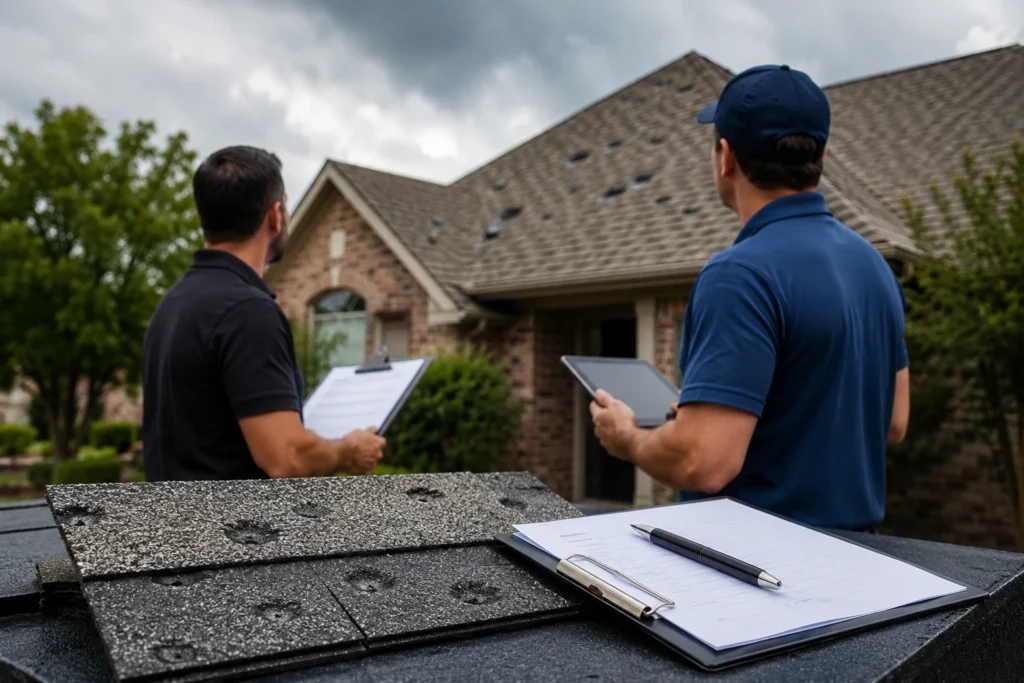
Now let’s look at the other side of the equation. A public adjuster works for the policyholder not the insurance company. That distinction changes everything. When discussing public adjuster vs. insurance adjuster for hail claims in Grand Prairie, TX, this is the core difference homeowners must understand first. Public adjusters advocate for the homeowner’s interests during the claim process.
Their responsibilities often include:
- Conducting detailed inspections
- Documenting all damage
- Reviewing insurance policies
- Preparing independent estimates
- Negotiating settlements
- Handling communication with carriers
- Managing supplemental claims
Unlike insurance adjusters, public adjusters are licensed specifically to represent policyholders during claim disputes and negotiations. Texas regulates public adjusters through the Texas Department of Insurance.
How Public Adjusters Approach Hail Claims Differently
Public adjusters typically inspect properties much more aggressively than standard carrier inspections. That is partly because their role is entirely different. Their objective is to identify every covered damage item supported by the policy.
That often includes:
- Detailed roof mapping
- Moisture detection
- Interior inspections
- Ventilation review
- Flashing analysis
- Collateral damage documentation
In larger claims, public adjusters may also coordinate:
- Roofing experts
- Engineers
- Moisture specialists
- Estimating consultants
This level of detail can become extremely important during disputed claims. Especially when hidden damage exists.
Public Adjuster vs. Insurance Adjuster: Side-by-Side Comparison
Here is a direct comparison homeowners can use when evaluating both roles.
| Category | Insurance Adjuster | Public Adjuster |
| Represents | Insurance company | Homeowner |
| Primary Goal | Evaluate claim for carrier | Maximize covered settlement |
| Pays Them | Insurance company | Policyholder |
| Inspection Style | Often faster | Usually more detailed |
| Negotiation Role | Explains carrier decision | Negotiates for homeowner |
| Policy Interpretation | Carrier-focused | Policyholder-focused |
| Supplemental Claims | May limit additions | Often aggressively pursues supplements |
| Claim Communication | Carrier-managed | Homeowner advocacy |
This table alone explains why disputes happen so frequently. Both sides are viewing the same property through very different lenses.
Why Hail Claims Become Disputed So Often
Hail claims are incredibly technical. That surprises many homeowners. At first glance, people assume roof claims are straightforward. But modern roofing systems involve layers of materials, ventilation standards, code compliance issues, and moisture protection systems that complicate everything.
Common dispute areas include:
Cosmetic vs. Functional Damage
Insurance companies sometimes classify damage as cosmetic rather than functional. That distinction matters because cosmetic damage may not qualify for full replacement under certain policies. Metal roofing disputes commonly fall into this category.
Roof Replacement Necessity
Homeowners and contractors may believe full replacement is necessary while the carrier approves only partial repairs. Matching issues often fuel this disagreement.
Hidden Moisture Problems
Water intrusion may not appear immediately after hailstorms.
Weeks later, homeowners discover:
- Ceiling stains
- Mold growth
- Insulation saturation
- Wood rot
By then, proving storm causation becomes harder.
Supplement Disputes
This is huge in Texas hail claims. Once tear-off begins, contractors frequently uncover additional damage not included in the original estimate. That leads to supplemental claim negotiations.
Hidden Damage Often Changes Everything
This is where many major claim disputes begin. A roof may initially appear repairable. Then the tear-off starts.
Suddenly contractors discover:
- Compromised decking
- Saturated underlayment
- Improper flashing
- Ventilation deficiencies
- Structural concerns
Now repair costs increase dramatically. This is one reason public adjusters often push for highly detailed inspections upfront. They understand how frequently hidden damage appears later. And frankly, experienced hail professionals know initial estimates are not always complete.
Hail Damage Claim Supplements
One of the biggest turning points in serious roofing claims happens after tear-off begins. Contractors often uncover hidden problems that were impossible to see during the initial inspection. Rotten decking, damaged underlayment, ventilation deficiencies, and flashing failures frequently appear once shingles are removed. This is why Hail Damage Claim Supplements become such an important part of many Texas insurance disputes. Supplemental negotiations allow newly discovered covered damage to be documented and added to the claim before repairs are completed.
How Public Adjusters Strengthen Hail Claims
Not every claim requires a public adjuster. But when major disputes arise, their documentation process can become extremely valuable.
Detailed Damage Documentation
Strong evidence drives strong claims. Public adjusters often create organized documentation packages including:
- Drone photography
- High-resolution roof images
- Moisture readings
- Weather reports
- Damage diagrams
- Contractor reports
Presentation matters. Well-organized claims tend to move more efficiently through negotiations.
Independent Estimating
Most public adjusters prepare their own estimates using industry-standard software like Xactimate. Accurate measurements matter enormously.
Even small roof diagram errors can affect:
- Material quantities
- Labor calculations
- Waste factors
- Steep charges
- Access difficulty pricing
Supplemental Claim Negotiation
This becomes one of the most valuable services during large losses.
Common supplement items include:
- Ice and water shield
- Starter shingles
- Ridge cap replacement
- Flashing replacement
- Drip edge upgrades
- Ventilation corrections
- Decking replacement
These costs add up quickly.
When an Insurance Adjuster Alone May Be Enough
It is important to stay balanced here. Not every homeowner needs a public adjuster. Some hail claims proceed smoothly without major issues.
Situations where homeowners may handle claims successfully include:
- Minor cosmetic damage
- Cooperative insurance carriers
- Clear replacement approvals
- Small repair scopes
- Homeowners experienced with insurance processes
If the insurance company responds fairly, communicates clearly, and provides a reasonable settlement, additional representation may not provide meaningful benefit. And homeowners should understand that public adjusters charge fees, usually based on a percentage of the final settlement. That matters.
When Hiring a Public Adjuster Makes Sense
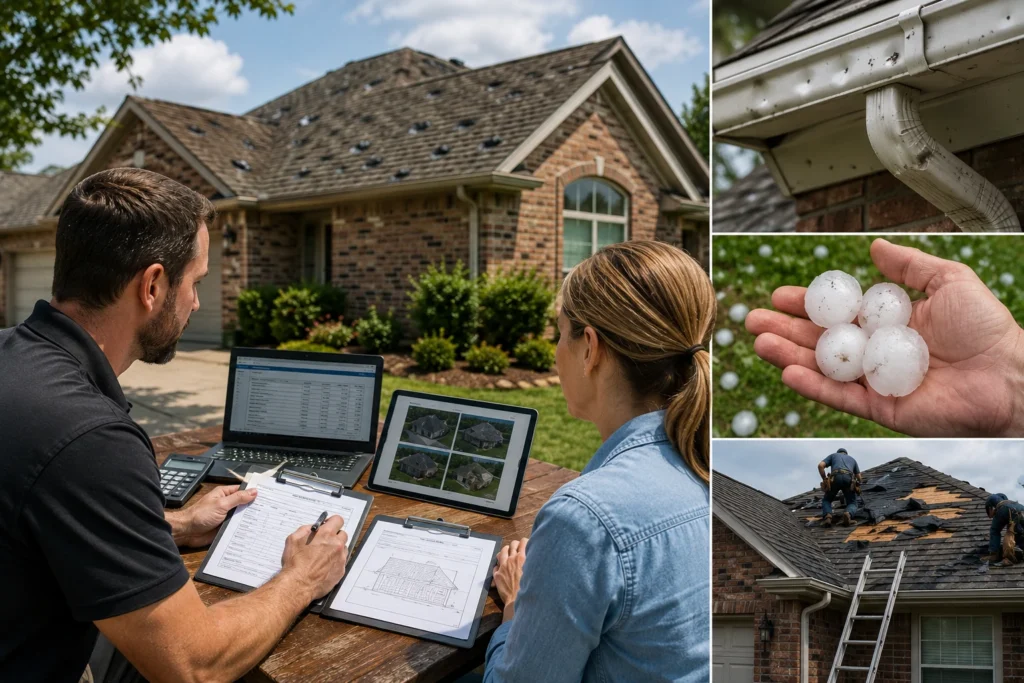
Now let’s discuss situations where public adjusters often become far more valuable.
Denied Hail Claims
Denied claims create immediate conflict. The homeowner believes storm damage exists. The carrier disagrees.
This often requires:
- Additional inspections
- Expert reports
- Policy interpretation review
- Negotiation leverage
Underpaid Claims
This is probably the most common issue. The carrier approves some damage, but the settlement amount falls short of actual repair costs.
Homeowners then face difficult choices:
- Pay out of pocket
- Fight the carrier
- Accept incomplete repairs
Large or Complex Losses
The larger the claim becomes, the more technical issues emerge. Complex roofing systems increase dispute potential dramatically.
Homeowners Too Busy to Manage the Process
Hail claims consume time. A lot of it. Phone calls. Emails. Inspections. Contractors. Documents. Estimates. Supplements. Some homeowners simply do not want the stress of managing every moving piece themselves. That is understandable.
Questions Homeowners Should Ask Before Hiring a Public Adjuster
Not all public adjusters provide the same level of expertise. Homeowners should evaluate carefully.
Important questions include:
- Are you licensed in Texas?
- How much experience do you have with hail claims?
- Have you handled claims in Grand Prairie?
- How are your fees structured?
- What happens if additional supplements arise?
- Will you personally handle negotiations?
- Can you explain your inspection process?
The Texas Department of Insurance recommends verifying licenses before signing contracts. That step matters.
Red Flags Homeowners Should Avoid
Storm season unfortunately attracts aggressive solicitation. Be cautious if someone:
- Demands immediate signatures
- Promises guaranteed payouts
- Avoids written contracts
- Refuses to explain fees clearly
- Uses high-pressure tactics
- Claims they can “force” approvals
Good claim professionals focus on evidence, documentation, and negotiation. Not unrealistic promises.
Why Documentation Wins Hail Claims
Emotion does not win insurance disputes. Documentation does. That is true whether a homeowner uses a public adjuster or not.
Strong hail claims typically include:
- Roof photos
- Interior damage photos
- Date-stamped evidence
- Contractor reports
- Weather verification
- Communication logs
- Repair invoices
- Moisture readings
Organized evidence changes negotiations. This is one reason some homeowners researching public adjuster vs. insurance adjuster for hail claims in Grand Prairie, TX ultimately decide to hire representation. They realize the process is far more technical than expected.
The Role of Technology in Modern Hail Claims
Modern inspections have become increasingly advanced.
Many professionals now use:
- Drone imaging
- Moisture meters
- Thermal imaging
- Satellite roof measurements
- Digital sketch software
Some damage invisible to the naked eye becomes easier to identify using advanced inspection methods. For example, some modern claim investigations even involve advanced imaging tools and analytical review methods similar to concepts used in Spectroscopy, where professionals analyze patterns and hidden variations that may not be immediately visible during basic inspections. While roofing inspections are very different scientifically, the principle of detecting subtle hidden changes remains surprisingly relevant during complex hail damage evaluations. Technology alone does not win claims. But accurate data absolutely strengthens them.
Why Roof Measurements Matter So Much
This part gets overlooked constantly. Roof geometry drives nearly every financial calculation inside an estimate. If measurements are wrong, the estimate becomes distorted immediately.
Important roofing variables include:
- Roof pitch
- Number of facets
- Valleys
- Ridges
- Starter lengths
- Waste percentages
- Flashing quantities
- Steep access difficulty
Even modest errors can create major payment discrepancies. That is why detailed inspections matter.
How Insurance Policies Shape Hail Claim Outcomes
One of the biggest mistakes homeowners make is assuming every policy handles hail damage the same way. They do not. And honestly, policy language is often where major disagreements begin during the public adjuster vs. insurance adjuster for hail claims in Grand Prairie, TX discussion. Two homeowners on the same street can experience the exact same hailstorm and receive very different settlement outcomes depending on their policy endorsements, exclusions, and coverage limits. That surprises people all the time.
Replacement Cost vs. Actual Cash Value
This distinction matters enormously. A replacement cost policy generally pays to restore damaged property using current material and labor pricing, subject to policy conditions and deductibles. An actual cash value policy factors depreciation into the settlement. That means older roofs may receive significantly reduced payouts. For example, a 15-year-old roof may have substantial depreciation applied even if full replacement becomes necessary after a hailstorm. Homeowners sometimes discover this only after receiving their settlement paperwork. That creates frustration fast.
Cosmetic Damage Exclusions
Some Texas policies now contain cosmetic damage limitations for metal roofing systems. The insurance company may argue the roof still functions properly even though visible dents exist across the surface. Homeowners often disagree. Especially when the roof’s appearance dramatically changes after the storm. This becomes one of the more heavily disputed areas in modern hail claims.
Matching Limitations
Partial repairs can create ugly results. A carrier may approve replacement for only one roof slope while the remaining slopes contain faded or discontinued shingles that no longer match properly. This creates visual inconsistency and can even affect resale value. Public adjusters frequently push harder on matching disputes because they understand how appearance, uniformity, and material availability affect real-world repairs.
Code Upgrade Coverage
Building codes evolve constantly. Roofing systems installed years ago may no longer meet current standards.
Modern code upgrades may involve:
- Enhanced underlayment
- Improved ventilation
- Drip edge requirements
- Ice and water shield installation
- Flashing improvements
Some policies include ordinance and law coverage for these upgrades. Others limit it. That difference can significantly affect out-of-pocket expenses.
Why Timing Matters So Much After a Hailstorm
Delays hurt claims. That is not fearmongering. It is reality. The longer homeowners wait, the harder certain damage becomes to prove. Additional weather exposure changes roof conditions. Wind loosens materials further. Water intrusion spreads. Temporary repairs alter evidence patterns.
Insurance companies may later argue:
- Damage resulted from wear and tear
- Problems developed after the storm
- Maintenance issues contributed to failure
- Moisture came from unrelated causes
Fast documentation protects homeowners from many of these disputes. That does not mean panic. It means acting strategically. Strong claim timelines often include:
| Action | Recommended Timing |
| Initial roof inspection | Within days of storm |
| Photo documentation | Immediately |
| Temporary mitigation | As soon as needed |
| Claim reporting | Promptly after damage discovery |
| Contractor estimates | Early in process |
| Supplemental documentation | During repairs |
Organized action creates stronger leverage later if disputes arise.
Why Emotional Decisions Hurt Hail Claims
This is important. Homeowners dealing with storm damage are stressed. Understandably so. But emotional reactions often create avoidable problems.
I have seen homeowners:
- Accept low settlements too quickly
- Hire the first contractor knocking at the door
- Ignore documentation requirements
- Throw away damaged materials
- Stop communicating in writing
- Assume verbal promises are enough
That approach creates risk. The strongest claims usually come from homeowners who stay calm, organized, and methodical throughout the process. Evidence wins. Documentation wins. Professional communication wins. Whether someone handles the claim independently or hires representation, discipline matters more than emotion during negotiations.
Public Adjuster vs. Insurance Adjuster for Hail Claims in Grand Prairie, TX: Which Is Better?

There is no universal answer. And anyone claiming otherwise is oversimplifying the process. Sometimes insurance adjusters handle claims fairly and efficiently. Sometimes homeowners absolutely benefit from independent representation.
The right choice depends on:
| Situation | Public Adjuster May Help? |
| Minor cosmetic damage | Usually not necessary |
| Major roof replacement dispute | Often beneficial |
| Denied claim | Frequently valuable |
| Large commercial property | Often beneficial |
| Extensive hidden damage | Helpful |
| Straightforward approved claim | Possibly unnecessary |
The bigger and more disputed the claim becomes, the more valuable professional advocacy often becomes. That is the simplest way to view it.
Steps Homeowners Should Take After a Grand Prairie Hailstorm
Whether you hire a public adjuster or not, these steps matter tremendously.
Schedule a Professional Inspection Quickly
Time changes evidence. Fast inspections help preserve documentation quality.
Photograph Everything
Take wide-angle and close-up photos.
Include:
- Roof impacts
- Gutters
- Downspouts
- Interior stains
- HVAC damage
- Fence damage
Keep Written Records
Save:
- Emails
- Claim numbers
- Inspection dates
- Contractor estimates
- Receipts
Paper trails matter enormously.
Review Your Policy Carefully
Coverage language affects everything.
Especially regarding:
- Cosmetic exclusions
- Matching provisions
- Depreciation
- Code upgrades
Do Not Rush Into Contracts
Storm pressure causes rushed decisions. Slow down. Review everything carefully before signing agreements.
Final Perspective for Grand Prairie Homeowners
The reality is this: hail claims have become increasingly technical in Texas. Roofing systems are more complex. Policy language is more restrictive. Claim investigations are more detailed. Supplemental disputes happen constantly. And large storm events create enormous pressure on both homeowners and insurance carriers.
That is exactly why so many property owners research public adjuster vs. insurance adjuster for hail claims in Grand Prairie, TX before making major claim decisions. Some homeowners will never need a public adjuster. Others may benefit tremendously from professional representation during denied claims, underpaid settlements, or large complex losses involving hidden damage and extensive negotiations. The key is understanding the difference before problems escalate. Because once the claim process starts moving, every decision matters.
FAQs
A public adjuster represents the homeowner, while an insurance adjuster represents the insurance company during the claim process.
It depends on the complexity of the claim. Large, denied, or underpaid claims often benefit from professional representation.
Yes. Fast inspections, hidden damage, and complex roofing systems can sometimes lead to overlooked issues.
Most public adjusters work on a contingency fee basis, meaning they receive a percentage of the final settlement.
These are additional claim requests submitted when hidden damage is discovered after repairs or roof tear-off begins.
In some situations, yes. New evidence, detailed inspections, and additional documentation may support reopening a claim.
Simple claims may resolve within weeks, while disputed or supplemental claims can take several months.
Take photos of roof damage, gutters, interior leaks, windows, HVAC units, and any damaged property immediately after the storm.
Yes. Public adjusters in Texas must be licensed through the Texas Department of Insurance.
Yes. Homeowners can negotiate independently, though complex disputes may become difficult without claim experience.