
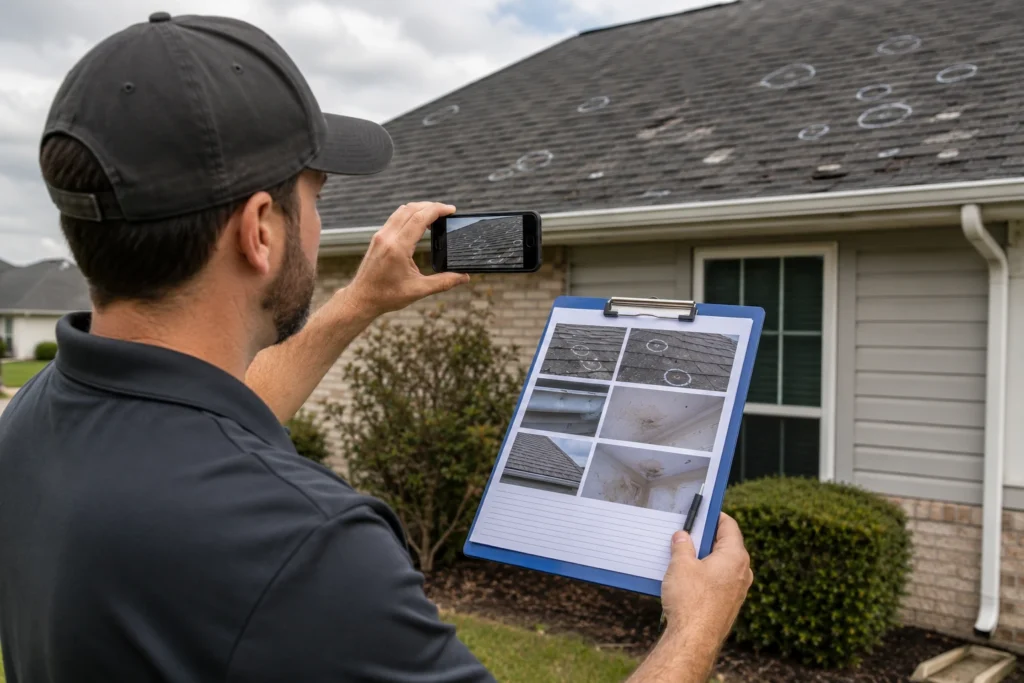
Hailstorms move fast. One minute the sky looks normal, the next your roof sounds like it is being hammered by gravel at highway speed. Then the storm passes, and homeowners are left staring at gutters, shingles, fences, and ceilings wondering one thing: What now? This is exactly why understanding How to Document Hail Damage for an Insurance Claim matters so much. Documentation is not just paperwork. It becomes the backbone of your entire claim. Strong evidence can mean the difference between a smooth settlement and weeks of frustrating disputes.
In Texas, especially in areas like Grand Prairie, hail claims are incredibly common. But insurance companies still require proof. Detailed proof. Organized proof. Time-stamped proof. And honestly, most homeowners are not prepared for that part until the storm already happens. The good news? You do not need to be a roofing expert to build a strong hail claim file. You simply need a smart process, good records, and the right strategy from day one. Let’s break it all down.
Why Proper Hail Damage Documentation Matters
Insurance companies do not approve claims based on assumptions. They approve claims based on evidence. That sounds simple. Yet this is where many claims begin falling apart. A homeowner may notice dents on gutters and missing shingles, but without proper photos, timelines, weather verification, and inspection notes, insurers can challenge almost everything. They may question when the damage occurred. They may argue the roof already had wear issues. They may even reduce the payout significantly. Documentation protects you from those problems.
Insurance Companies Need Verifiable Evidence
Every adjuster wants to answer several questions quickly:
- Did hail actually hit the property?
- Was the damage caused by this storm?
- How severe was the impact?
- Which building components were affected?
- What repairs are necessary?
The better your documentation, the easier those questions become to answer. Weak documentation creates gaps. Gaps create disputes.
Damage Gets Worse Over Time
This is one of the biggest reasons fast documentation matters. A roof may look “mostly okay” immediately after a storm. Then weeks later:
- Granules begin washing away
- Leaks appear
- Shingles crack further
- Moisture enters the attic
- Mold begins developing
Once weather exposure continues, insurers may argue later damage resulted from delayed maintenance instead of the storm itself. That argument becomes harder to make when you already documented everything immediately after the event.
Documentation Gives You Negotiation Power
This matters more than most homeowners realize. If the initial estimate comes back low, your evidence becomes leverage. Photos, contractor reports, moisture readings, and storm records help support supplemental claims later. Without documentation, you are relying almost entirely on the insurance company’s inspection. That is risky.
What To Do Immediately After a Hailstorm
The hours immediately following a storm are critical. Do not rush onto the roof. Do not panic. Do not start throwing damaged materials away. Start methodically.
Prioritize Safety First
Before documenting anything, look for hazards.
Watch for:
- Downed electrical lines
- Broken glass
- Slick roof surfaces
- Exposed nails
- Water near electrical systems
If conditions feel unsafe, stay off the roof entirely and document from the ground first. No insurance claim is worth an injury.
Record the Storm Date and Time
Write it down immediately. Seriously. This simple step becomes surprisingly important later.
Include:
| Information | Why It Matters |
| Date of storm | Matches insurance timeline |
| Approximate time | Supports weather verification |
| Storm duration | Helps establish severity |
| Hail size estimate | Supports damage consistency |
You can later compare your notes with official weather reports from the National Weather Service or NOAA.
Prevent Additional Damage
Insurance policies generally require homeowners to mitigate further damage after a storm.
That means you should:
- Tarp exposed roof sections
- Remove standing water
- Protect valuables from leaks
- Cover broken windows
Keep every receipt. Temporary repairs may qualify for reimbursement.
Do Not Throw Damaged Materials Away
This is a major mistake. Damaged shingles, gutters, flashing, or siding pieces may become important evidence later. Store them safely if possible until inspections are complete.
The Complete Hail Damage Documentation Checklist
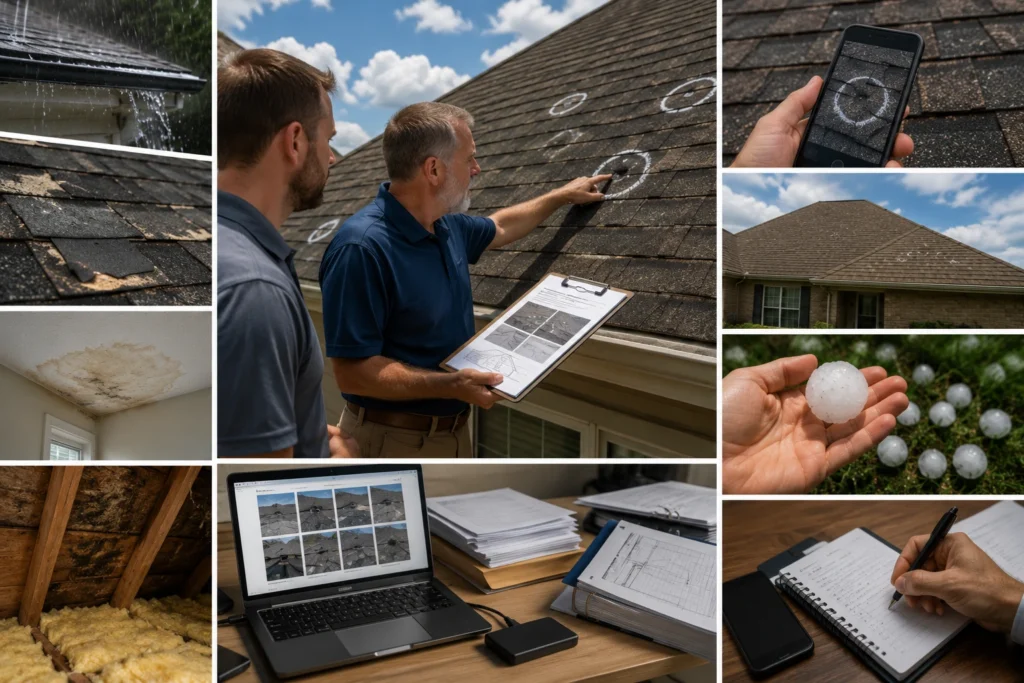
Now we get into the core of How to Document Hail Damage for an Insurance Claim. You need a complete evidence package. Not random photos. Not a few blurry shots from the driveway. A real documentation system.
Start With Wide-Angle Photos
Before taking close-ups, document the entire property.
Capture:
- All roof slopes
- Exterior walls
- Gutters
- Downspouts
- Garage doors
- Windows
- HVAC systems
- Fence lines
- Decks
- Patio covers
Wide-angle shots establish context. They show overall storm impact patterns and property condition.
Take Detailed Close-Up Photos
This is where strong claims are built.
Focus on:
- Bruised shingles
- Circular impact marks
- Granule loss
- Metal dents
- Cracks
- Splits
- Broken tiles
- Soft metal damage
Try using chalk circles around impact points before photographing them. This helps visibility tremendously.
Use Good Lighting
Lighting changes everything. Morning and evening sunlight often reveal dents and bruising more clearly than midday light.
Avoid:
- Dark blurry photos
- Wet reflective surfaces
- Shadow-covered areas
Take multiple angles whenever possible.
Record Video Walkthroughs
Videos add credibility. Narrate what you are seeing while recording.
For example:
“This section above the garage has visible granule loss and multiple circular impact marks after the May hailstorm.”
Simple narration helps create timeline clarity later.
Document Interior Damage Too
Do not stop at the roof. Interior evidence matters enormously.
Look for:
- Ceiling stains
- Wet insulation
- Bubbling paint
- Wall discoloration
- Attic moisture
- Dripping water
- Musty odors
Even minor interior signs may support roof-related storm damage claims.
How To Document Roof Hail Damage Properly
Different roofing systems show hail damage differently. That is important because insurers often dispute roof damage based on material type.
Asphalt Shingle Damage
This is the most common residential roofing material in Texas.
Signs include:
- Granule displacement
- Soft bruising
- Circular dark spots
- Exposed fiberglass matting
- Fractured shingle edges
Sometimes the damage feels soft when lightly pressed. Take close-up photos from multiple directions.
Metal Roof Damage
Metal roofs behave differently during hailstorms.
Look for:
- Dents
- Coating fractures
- Scratches
- Bent seams
- Fastener distortion
Some dents may appear cosmetic initially but later create coating failures and corrosion.
Tile Roof Damage
Tile systems often crack instead of bruise.
Inspect for:
- Hairline fractures
- Broken corners
- Chipping
- Dislodged tiles
Even small fractures may allow long-term water intrusion.
Flat Roof Systems
Commercial and low-slope roofs create unique challenges.
Watch for:
- Membrane punctures
- Pooling water
- Surface blisters
- Crushed insulation
- Seam separation
Flat roof damage is frequently underestimated during quick inspections.
Why Soft Metal Damage Matters So Much
Professional inspectors often look at soft metals first because they clearly reveal hail impacts.
These include:
- Gutters
- Downspouts
- Roof vents
- Flashings
- AC fins
- Metal window trim
If soft metals show heavy impacts, it supports broader roof damage arguments. Take very clear close-up photos here. This evidence can become extremely valuable during claim negotiations.
Tools That Strengthen Hail Damage Claims
Technology has changed storm inspections dramatically. Today, stronger documentation often comes from combining traditional photos with modern inspection tools.
Drone Inspections
Drone photography is becoming incredibly common in hail claims.
Benefits include:
- Safer inspections
- Full roof visibility
- High-resolution imagery
- Better slope comparisons
Drone images can reveal patterns difficult to see from ground level.
Moisture Meters
Hidden moisture creates huge problems after storms.
Moisture meters help detect:
- Wet insulation
- Wall saturation
- Ceiling moisture
- Hidden leak paths
These readings help support interior damage claims.
Thermal Imaging
Thermal cameras identify temperature differences caused by trapped moisture.
This can reveal:
- Leak migration
- Hidden water pockets
- Insulation failures
Some public adjusters and contractors use thermal scans during larger claims.
Weather Reports
Weather verification strengthens everything.
Helpful records include:
- NOAA storm reports
- Hail size data
- Radar maps
- Wind speed reports
These reports help confirm the storm actually produced hail capable of causing damage. The official Texas Department of Insurance guidance also explains why fast documentation matters after severe weather.
Accurate storm verification becomes incredibly important during a Hail Damage Roof Insurance Claim because insurance carriers often compare property damage against recorded storm intensity data. Some inspections even reference advanced atmospheric concepts like Mesocyclone development when analyzing severe thunderstorm rotation patterns associated with large hail production across Texas. Strong weather correlation can help support both roof and exterior damage documentation during disputed claims.
Organizing Your Insurance Claim Evidence
Good documentation becomes useless if it is disorganized. This part matters more than people think.
Create a Dedicated Claim Folder
Keep everything together.
Use:
- Cloud storage
- Digital folders
- Backup drives
- Printed copies
Include:
- Photos
- Videos
- Estimates
- Receipts
- Emails
- Inspection reports
- Claim numbers
Organization makes communication smoother later.
Label Your Photos Properly
Do not upload hundreds of random file names.
Instead use labels like:
- NorthSlope_ShingleDamage_051526
- GarageCeilingLeak_Interior
- GutterDent_WestSide
Clear labels save enormous time during disputes.
Keep a Communication Log
Track every conversation.
Include:
| Item | Example |
| Adjuster name | John Smith |
| Date called | May 14 |
| Discussion topic | Roof inspection |
| Follow-up needed | Send contractor report |
This protects you if communication problems develop later.
Common Mistakes Homeowners Make
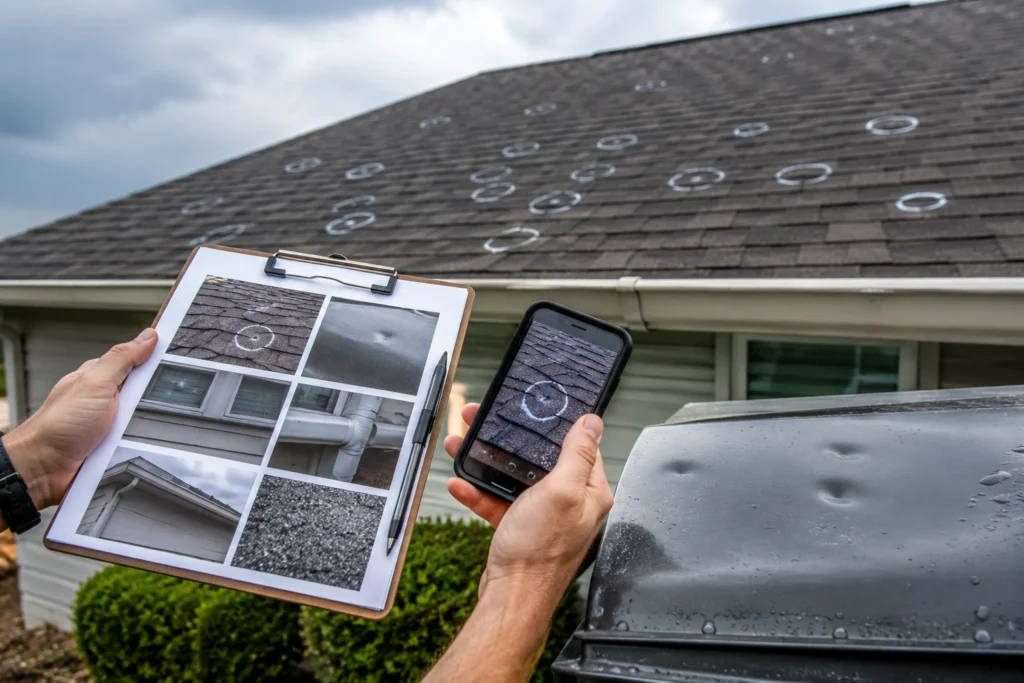
Many hail claims weaken because of avoidable mistakes. Let’s cover the biggest ones.
Waiting Too Long
Time damages evidence. Rain, sunlight, debris, and repairs all change conditions quickly. Document immediately whenever possible.
Taking Too Few Photos
More documentation is usually better.
Take:
- Wide shots
- Mid-range shots
- Close-ups
- Multiple angles
You cannot recreate evidence later once repairs begin.
Ignoring Interior Damage
Homeowners often focus only on roofs. But interior signs frequently strengthen the claim significantly. Document everything. Even small discoloration matters.
Trusting Only the Insurance Inspection
This is a major issue in disputed claims. Insurance adjusters vary widely in experience and thoroughness. Independent documentation provides protection if damage gets missed.
How Insurance Adjusters Evaluate Hail Damage
Understanding the adjuster process helps homeowners document more effectively. Adjusters are looking for consistency.
They examine:
- Impact direction
- Damage patterns
- Material response
- Storm correlation
- Roof age
- Prior repairs
Functional vs Cosmetic Damage
This becomes one of the biggest claim debates. Functional damage affects performance. Cosmetic damage affects appearance only. Insurers sometimes argue dents or marks are merely cosmetic. Homeowners and contractors may disagree. Strong documentation helps support the functional impact argument.
Matching Damage to Storm Dates
This is why weather reports matter.
Adjusters compare:
- Storm timing
- Hail size
- Damage consistency
- Neighborhood impact
The more organized your evidence is, the easier this process becomes.
Why Contractor Reports Help So Much
Professional inspection reports carry weight.
A strong roofing report may include:
- Roof diagrams
- Slope measurements
- Damage counts
- Material assessments
- Repair recommendations
- Photo references
This creates independent support beyond the insurance inspection alone. Some contractors also use drone mapping software and moisture analysis during evaluations.
When To Hire a Public Adjuster
Not every claim requires outside representation. But some absolutely benefit from it.
Especially when:
- Claims are denied
- Payments seem low
- Damage was missed
- Supplements become necessary
- Large losses occur
Signs Your Claim May Be Underpaid
Warning signs include:
- Missing roof sections in estimates
- Low material quantities
- No code upgrades included
- Incomplete interior repairs
- Minimal soft metal allowances
If something feels incomplete, investigate further.
Denied Claims Often Involve Documentation Problems
Insurance companies may argue:
- Wear and tear
- Old roof age
- Prior damage
- Lack of storm evidence
This is where organized records become critical. Detailed documentation can completely change claim outcomes.
Benefits of Public Adjusters
Public adjusters work for policyholders, not insurance companies.
They often help by:
- Reviewing policies
- Organizing evidence
- Preparing estimates
- Managing communication
- Negotiating settlements
For homeowners in Grand Prairie dealing with severe storm losses, local experience can matter significantly because Texas roofing codes and hail patterns create unique claim challenges.
Texas-Specific Hail Claim Challenges
Texas sees some of the most aggressive hail activity in the country. That creates a massive number of claims every year. According to Texas on Wikipedia, the state regularly experiences severe convective storms capable of producing damaging hail events.
Percentage Deductibles
Texas policies often use percentage deductibles instead of flat deductibles. That means out-of-pocket costs may be higher than expected. Understand your policy carefully before starting repairs.
Building Code Issues
Older roofs may not meet current requirements.
Code upgrades can involve:
- Underlayment
- Ventilation
- Flashing systems
- Fasteners
- Ice and water barriers
These issues frequently create supplemental claim opportunities.
Fast-Moving Storm Systems
Storms in Grand Prairie can produce intense damage quickly. Neighborhood-wide impacts often occur within minutes. That makes fast documentation incredibly important because roofing contractors and adjusters become overwhelmed after major events.
Advanced Documentation Strategies That Strengthen Large Hail Claims
For smaller claims, basic photos and repair estimates may be enough. But for larger losses, especially roofing systems involving multiple slopes, interior leaks, detached structures, or commercial-grade materials, stronger documentation strategies become incredibly important. This is where many homeowners unintentionally leave money on the table. The difference between an average claim file and a well-prepared claim file is usually detail. And detail matters.
Create a Storm Timeline
One of the smartest things you can do is build a complete timeline from the moment the storm begins.
Include:
| Timeline Item | Example |
| Storm arrival | 4:15 PM |
| Hail started | 4:22 PM |
| Estimated hail size | Quarter-sized to golf-ball-sized |
| Initial observations | Loud roof impacts and gutter overflow |
| First visible damage noticed | Fence dents and roof granule loss |
| Temporary mitigation completed | Roof tarp installed at 8:00 PM |
This may sound excessive initially. It is not. Detailed timelines help establish consistency throughout the claim process and reduce confusion later if multiple inspections occur.
Document Neighboring Property Damage
Insurance companies often evaluate neighborhood-wide storm patterns.
If nearby homes show:
- Broken windows
- Roof tarps
- Damaged gutters
- Fence impacts
- Siding damage
Take photos from public areas when possible. This helps demonstrate the storm’s overall severity across the area. In places like Grand Prairie, severe hail events often affect entire neighborhoods at once. Consistent surrounding damage can strengthen the credibility of your own claim significantly.
Save Inspection Notes From Every Visit
Many claims involve multiple inspections over time.
You may deal with:
- Roofing contractors
- Insurance adjusters
- Engineers
- Public adjusters
- Mitigation companies
Do not rely on memory alone.
Write down:
- Who visited
- What they observed
- Areas inspected
- Recommendations made
- Differences between inspections
This becomes extremely useful if claim disputes develop later.
Understand Why Supplemental Claims Happen
Homeowners are often surprised when contractors mention supplements. But supplemental claims are extremely common after hailstorms.
Why? Because some damage is hidden until repairs begin.
For example:
- Wet decking beneath shingles
- Damaged flashing beneath roof edges
- Ventilation issues
- Code upgrade requirements
- Additional underlayment replacement
- Hidden moisture intrusion
Proper documentation before and during repairs helps support these supplemental requests. Without evidence, additional repair approvals become harder to secure.
Keep Before-and-After Photos
This is one of the most overlooked parts of How to Document Hail Damage for an Insurance Claim. If you have older photos of your roof before the storm, save them.
These can help demonstrate:
- Prior roof condition
- Lack of pre-existing damage
- Maintenance history
- Roofing age consistency
Then compare those with post-storm photos. The contrast can become powerful evidence during disputes over wear and tear versus storm-created damage.
Why Consistency Matters More Than Perfection

Homeowners sometimes worry that they are not taking “professional enough” photos. Do not overthink it. Consistency matters more than perfection. Take clear photos. Take many of them. Label them carefully. Stay organized.
That alone puts you far ahead of most claim files insurers receive after major storms. And honestly, organized homeowners tend to navigate the claim process far more smoothly because they can answer questions quickly, provide evidence immediately, and support their position with confidence. That matters during negotiations. A lot.
Final Steps Before Filing Your Claim
Before submitting anything, slow down and review everything carefully.
Review Your Entire Documentation Package
Make sure you have:
- Roof photos
- Interior photos
- Videos
- Contractor reports
- Weather verification
- Temporary repair receipts
- Communication records
Completeness matters.
Organize Evidence Professionally
Presentation affects efficiency.
Create folders like:
- Exterior Damage
- Interior Damage
- Weather Reports
- Estimates
- Receipts
This helps adjusters review evidence faster.
Prepare for the Inspection
When the adjuster arrives:
- Walk the property together
- Point out all damage areas
- Share your photos
- Discuss interior concerns
- Ask questions
Do not assume every issue will automatically be noticed.
Continue Monitoring the Property
Some hail-related issues develop later.
Continue watching for:
- New leaks
- Moisture odors
- Ceiling stains
- Shingle deterioration
- Mold growth
Update your documentation if conditions change.
Final Thoughts
Understanding How to Document Hail Damage for an Insurance Claim is one of the smartest things a homeowner can learn before storm season arrives. Because once hail hits, the process moves quickly. Adjusters get overloaded. Roofing companies flood neighborhoods. Evidence begins changing almost immediately. And insurance disputes often come down to one thing:
Documentation. Strong documentation creates stronger claims. Clear photos. Organized records. Verified weather data. Detailed inspection notes. Professional reports. These pieces work together to support fair settlements and reduce disputes. For homeowners in Grand Prairie, taking a proactive approach after storms can make a huge difference in claim outcomes. The earlier you document damage, the stronger your position becomes later. And honestly, that preparation gives homeowners something incredibly valuable after a severe storm: Confidence.
FAQs
Document hail damage as soon as conditions are safe. Fast documentation preserves evidence before weather exposure changes the damage.
Take wide-angle and close-up photos of the roof, gutters, siding, windows, HVAC units, and any interior leaks or stains.
Yes, but strong roof photos significantly improve claim support and help reduce disputes with the insurance company.
A professional inspection can help identify damage you may miss and provide valuable documentation for your claim file.
You can request a reinspection and provide additional evidence like contractor reports, drone photos, and moisture readings.
Yes. Ceiling stains, attic leaks, and moisture intrusion may help connect roof damage to the storm event.
Drone inspections provide safer and clearer roof documentation, especially on steep or difficult-to-access roofs.
Simple claims may resolve within weeks, while disputed or supplemental claims can take several months.
Yes. Granule loss, leaks, and moisture issues sometimes become visible weeks or months after the hailstorm.
Organized photos, receipts, and reports make it easier to support your position during inspections and negotiations.