
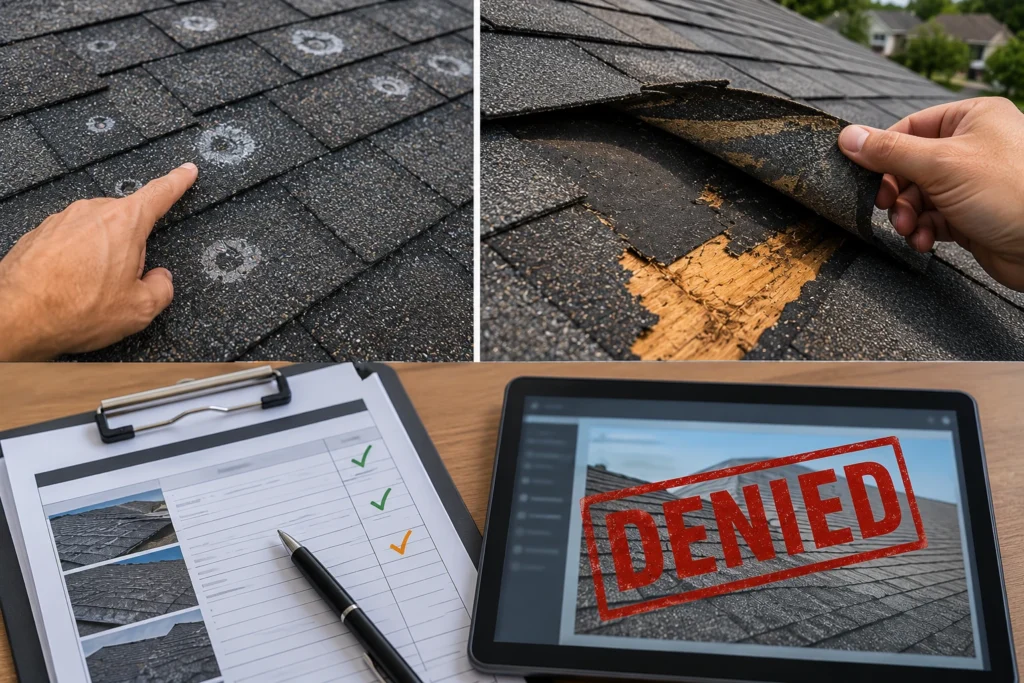
Texas hailstorms do not play around. One afternoon your roof looks perfectly fine. A few hours later, you may be staring at cracked shingles, dented flashing, leaking ceilings, and a confusing insurance process that suddenly feels overwhelming. That is exactly why understanding the roof hail damage insurance claim Texas process matters before problems spiral out of control. And honestly? Many homeowners wait too long. They assume the damage is minor. They trust the first inspection without question. Or they simply do not realize how much damage can stay hidden beneath the surface after a major storm.
That becomes expensive. A strong hail damage on roof insurance claim starts with fast action, proper documentation, and understanding how insurance carriers evaluate storm losses. The homeowners who recover the most financially are usually the ones who stay organized, proactive, and informed from day one.
If you live in Grand Prairie, severe weather is not hypothetical. Hailstorms routinely move through North Texas with enough force to damage shingles, metal roofing systems, gutters, vents, skylights, and even structural decking beneath the roof surface. This guide breaks down the entire process step by step. From identifying damage by roof type to supplements and negotiations, this is the complete resource homeowners need to protect their property and strengthen their hail roof damage insurance claim.
Understanding Hail Damage on Different Roof Types
Not all roofs react to hail the same way. That matters because insurance adjusters often evaluate roofing systems differently depending on the materials involved. What looks minor on one roof may signal major functional damage on another.
Let’s break it down.
How Hail Impacts Asphalt Shingle Roofs
Asphalt shingles take the brunt of Texas hailstorms. They are everywhere. And they are vulnerable.
The most common signs of hail damage include:
- Granule loss
- Circular bruising
- Cracked shingles
- Soft impact spots
- Exposed fiberglass matting
- Torn shingle edges
Granules matter more than many homeowners realize. They protect shingles from ultraviolet exposure and weather deterioration. Once those granules disappear, the aging process accelerates quickly. A roof that still looks “mostly fine” from the street may already have shortened life expectancy after a storm.
Older roofs become especially vulnerable. Heat exposure weakens shingles over time. Then hail hits. Suddenly brittle shingles crack more easily and lose large sections of protective granules. Insurance carriers sometimes classify this as wear and tear instead of storm damage. That becomes one of the biggest disputes during a roof hail damage insurance claim Texas investigation.
Identifying Hail Damage on Metal Roofs
Metal roofing performs well in many conditions. Hail, however, creates unique issues. The obvious damage includes dents and impact marks. Easy to spot. Easy to photograph. But cosmetic appearance is only part of the story.
Hail can also damage:
- Fasteners
- Seams
- Protective coatings
- Locking systems
- Paint finishes
Some dents may seem harmless while actually compromising long-term performance. And carriers frequently argue over cosmetic exclusions. That becomes frustrating because even cosmetic damage can affect property value, future corrosion resistance, and overall roof integrity. Large hail impacts may also create hidden stress points beneath panels that are not immediately visible during quick inspections.
Tile Roof Hail Damage Warning Signs
Tile roofs are durable. But when they fail, they fail hard. Clay and concrete tiles can crack under hail impacts, especially near edges and corners where stress concentrates.
Look for:
- Fractured tiles
- Chipped corners
- Broken edges
- Exposed underlayment
- Sliding or displaced tiles
Tile systems often hide damage beneath the surface. That is why inexperienced inspections create problems. Someone may replace a few visibly broken tiles while missing compromised underlayment beneath them. Weeks later? Water intrusion begins. And now the claim becomes more complicated.
Roof Components Insurance Carriers Often Overlook
Here is where many claims start falling apart. Insurance inspections frequently focus heavily on shingles while missing surrounding roof components entirely.
Commonly overlooked items include:
| Roof Component | Why It Matters |
| Flashing | Prevents leaks around penetrations |
| Ridge caps | Vulnerable to direct impacts |
| Roof vents | Can crack or loosen |
| Gutters | Denting indicates storm severity |
| Skylights | Seal damage creates leaks |
| Soft metals | Confirm hail direction and impact |
These components help prove storm intensity. They also help support broader hail roof damage insurance evaluations during negotiations.
Immediate Steps to Take After a Hailstorm
What homeowners do during the first 24 to 72 hours matters tremendously. Bad decisions early can weaken claims later.
Prioritize Safety First
Never rush onto a wet roof after a storm. Seriously. It is dangerous. High winds, slippery surfaces, damaged decking, and electrical hazards create major risks. Stay on the ground initially and focus on visible signs from safe locations.
Inside the home, check for:
- Ceiling stains
- Active leaks
- Wet insulation
- Moisture around vents
- Attic dripping
Document everything immediately.
Perform a Ground-Level Inspection
You can often identify obvious storm damage without climbing onto the roof. Walk the property carefully.
Look for:
- Shingle debris
- Granule accumulation in gutters
- Dented downspouts
- Damaged window screens
- Broken fence staining
- Metal impacts on AC units
These surrounding impacts help support the overall hail damage on roof insurance claim process. Take wide-angle photos first. Then zoom in. Good documentation always includes both context and detail. Many homeowners search online for “How to Document Hail Damage for an Insurance Claim” after storms hit, but the strongest claims usually come from organized evidence gathered within the first 24 to 48 hours after the hail event.
Prevent Additional Damage
Insurance policies generally require homeowners to mitigate further damage after storms. That means temporary protection matters.
Examples include:
- Emergency tarping
- Leak containment
- Temporary patching
- Water extraction
Save every receipt. Seriously. Every single one. Temporary repair costs often become reimbursable within the claim.
Contact a Qualified Roofing Professional
Not every contractor understands storm claims. That becomes obvious quickly.
Choose professionals familiar with:
- Hail inspections
- Insurance scopes
- Building code requirements
- Supplemental negotiations
- Texas roofing regulations
Avoid contractors making outrageous promises at the door immediately after storms. Fast-talking storm chasers create enormous problems for homeowners every year.
Notify Your Insurance Carrier Promptly
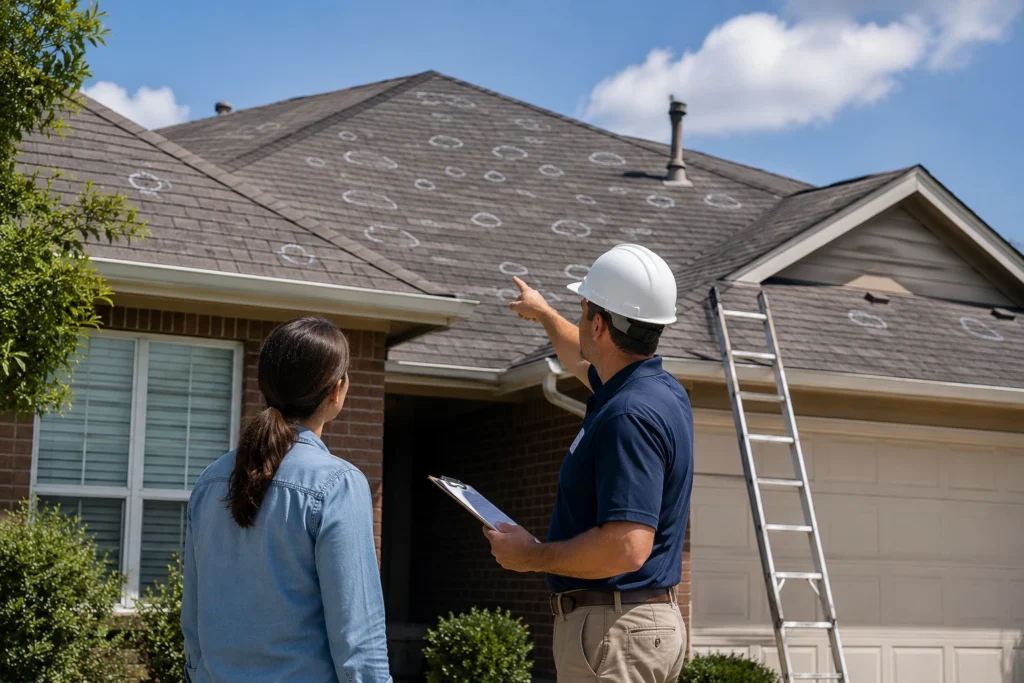
Delays create risk. The longer homeowners wait, the harder it becomes to separate storm damage from normal deterioration or additional weather exposure.
Most carriers will ask for:
- Date of loss
- Property information
- Description of damage
- Photos if available
Open the claim quickly even if the full scope is still developing.
How to Document Damage for Your Insurance Claim
Strong claims are built on evidence. Not emotion. Not frustration. Evidence wins.
Build a Detailed Evidence File
The best claims contain organized documentation from the very beginning.
Focus on:
- Date-stamped photos
- Videos
- Inspection reports
- Drone images
- Weather reports
- Interior moisture documentation
Take both wide and close-up images. Wide shots establish location. Close-ups establish severity. Together they create credibility.
Weather Documentation Strengthens Claims
Storm verification matters more than many homeowners realize.
Helpful evidence includes:
| Documentation Type | Purpose |
| NOAA storm reports | Confirms storm timing |
| Hail maps | Verifies storm path |
| Weather station data | Supports hail size claims |
| Radar imagery | Confirms storm intensity |
This evidence becomes especially important when carriers dispute whether damage actually resulted from a specific hail event.
Interior Damage Documentation
Roof damage often reveals itself indoors first.
Document:
- Ceiling discoloration
- Attic moisture
- Mold growth
- Wet insulation
- Warped drywall
Interior damage strengthens causation arguments during roof hail damage insurance claim Texas disputes. It helps connect exterior storm impacts to actual property loss.
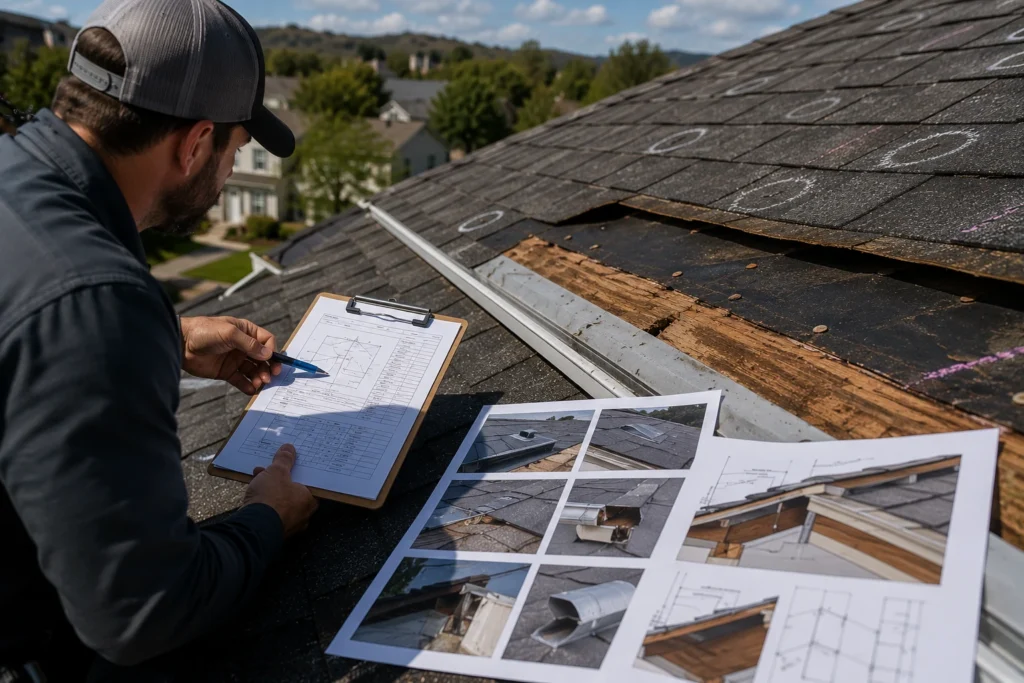
Contractor Inspection Reports Matter
Detailed contractor inspections often uncover issues carriers initially miss.
Strong reports include:
- Test square analysis
- Roof measurements
- Elevation diagrams
- Material identification
- Photographic evidence
The more detailed the inspection, the stronger the negotiation position later. Detailed inspections sometimes involve advanced moisture detection methods and material analysis similar to principles used in spectroscopy, especially when evaluating hidden roof deterioration beneath visible hail impacts.
Keep Every Communication Organized
Claims become document-heavy quickly.
Create folders for:
- Emails
- Estimates
- Photos
- Inspection notes
- Payment records
- Repair invoices
Organization reduces confusion and strengthens credibility during disputes.
Understanding the Roof Insurance Claim Process in Texas
Insurance claims feel intimidating when homeowners go through them for the first time. Understanding the process helps reduce mistakes.
Filing the Initial Claim
The process starts when homeowners notify their insurance carrier of storm damage.
The carrier assigns:
- A claim number
- An adjuster
- Inspection scheduling
Homeowners should ask questions early about:
- Deductibles
- Depreciation
- Coverage limitations
- Cosmetic exclusions
Understanding policy language matters. A lot.
The Insurance Adjuster Inspection
Carrier inspections vary widely. Some are thorough. Others are rushed.
Adjusters typically inspect:
- Roof surfaces
- Gutters
- Flashing
- Soft metals
- Interior leak areas
But limitations happen constantly.
Common inspection problems include:
- Time pressure
- Wet roofs
- Limited attic access
- Steep roof slopes
- Missed elevations
That is why independent inspections become so important during hail roof damage insurance evaluations.
The First Insurance Estimate
After inspection, carriers produce an estimate called a scope of loss.
This document outlines:
- Approved repairs
- Quantities
- Pricing
- Labor calculations
Most carriers use estimating software such as Xactimate. But software pricing does not always reflect real-world local costs. Especially in active storm markets like Grand Prairie where labor demand spikes after severe weather.
Cosmetic vs Functional Damage Disputes
This becomes one of the largest arguments in Texas hail claims.
Carriers often claim damage is merely cosmetic.
Homeowners and contractors argue the damage affects functionality.
Functional damage may include:
- Reduced water shedding
- Exposed matting
- Compromised coatings
- Reduced lifespan
- Seal failures
The distinction matters because coverage often depends on whether the damage impacts roof performance.
Claim Approval, Partial Approval, or Denial
Not all claims end smoothly.
Outcomes may include:
| Outcome | Meaning |
| Full approval | Carrier agrees with scope |
| Partial approval | Some damage excluded |
| Denial | Claim rejected entirely |
Partial approvals happen constantly. And that is usually where supplement negotiations begin. Understanding “What to Do If Your Hail Claim Was Denied in Grand Prairie, TX” becomes critical when carriers argue that roof deterioration resulted from aging rather than recent storm impacts.
What Insurance Carriers Commonly Miss in Their Scope
Here is the reality. Initial insurance estimates frequently miss legitimate costs. Not always intentionally. But it happens constantly.
Underestimated Roofing Quantities
Small line-item omissions add up fast.
Common missing items include:
- Starter shingles
- Ridge cap quantities
- Drip edge
- Steep charges
- High charges
- Waste calculations
Those missing costs can create thousands in underpayment.
Building Code Upgrades
Building codes evolve constantly. Older roofs often fail to meet current requirements during replacement. That creates supplemental costs carriers may initially overlook.
Common code-related issues include:
| Code Requirement | Why It Matters |
| Deck renailing | Wind resistance compliance |
| Drip edge installation | Updated edge protection |
| Ventilation upgrades | Airflow requirements |
| Flashing replacement | Modern waterproofing standards |
Code compliance frequently becomes a major factor during roof hail damage insurance claim Texas negotiations.
Hidden Structural Damage
Some damage only appears after tear-off begins.
Examples include:
- Rotten decking
- Moisture intrusion
- Fastener pull-through
- Delaminated sheathing
Supplements exist specifically because hidden damage is common. Especially after major hail events.
Overlooked Exterior Components
Storms rarely damage only roofs.
Other impacted items may include:
- Window screens
- Siding
- Gutters
- Garage doors
- HVAC systems
- Fencing
When these items are omitted, total claim value drops significantly.
Labor and Material Pricing Gaps
Insurance pricing databases lag behind reality sometimes. Especially after widespread Texas hailstorms.
Roofing contractors in Grand Prairie often encounter pricing disputes involving:
- Material shortages
- Labor demand spikes
- Disposal costs
- Equipment pricing
That gap creates supplement negotiations. Contractors and policyholders frequently encounter “Hail Damage Claim Supplements: What Carriers Miss in Their Scope” because initial inspections often overlook code upgrades, hidden decking damage, and accurate material quantities.
The Supplement Process Explained
Supplements sound complicated. They are not. They are simply claim revisions.
What Is a Roofing Supplement?
A supplement requests additional payment for items omitted or underestimated in the original scope. Supplements are extremely common in storm restoration. Especially with hail roof damage insurance claims.
When Supplements Become Necessary
Several situations trigger supplements:
- Hidden damage discovered during tear-off
- Code upgrades
- Additional labor requirements
- Material changes
- Underestimated quantities
Supplements are not red flags. They are part of the process.
Documentation Needed for Supplements
Strong supplements rely on evidence.
That includes:
- Photos
- Measurements
- Contractor reports
- Code references
- Manufacturer requirements
Weak documentation leads to delays. Detailed documentation speeds approvals.
How Supplement Negotiations Work
Negotiations usually involve communication between contractors, public adjusters, and insurance carriers.
This may include:
- Scope revisions
- Reinspection requests
- Additional reports
- Pricing negotiations
Patience matters here. Large supplements sometimes require multiple review rounds.
Why Supplements Increase Claim Accuracy
Supplements help restore properties properly. Without them, homeowners often absorb hidden costs themselves. That becomes financially painful fast.
Proper supplements protect:
- Roof lifespan
- Structural integrity
- Code compliance
- Property value
Why a Public Adjuster Changes the Outcome
This is where many homeowners finally regain leverage. Public adjusters work for policyholders. Not insurance carriers. That distinction matters enormously.
What a Public Adjuster Actually Does
A public adjuster helps manage and negotiate claims. Responsibilities often include:
- Policy review
- Damage assessment
- Documentation
- Scope analysis
- Negotiation support
They organize the claim strategically.
Public Adjuster vs Insurance Adjuster
This confusion happens constantly. Homeowners assume the insurance adjuster represents them. They do not.
| Role | Represents |
| Insurance Adjuster | Insurance carrier |
| Public Adjuster | Policyholder |
That difference shapes the entire claim process. The difference between “Public Adjuster vs. Insurance Adjuster for Hail Claims in Grand Prairie, TX” comes down to representation, since one works for the policyholder while the other represents the insurance carrier.
How Public Adjusters Strengthen Roof Claims
Experienced public adjusters understand:
- Scope preparation
- Building codes
- Documentation standards
- Supplemental negotiation
- Policy interpretation
They also identify inconsistencies carriers may overlook or undervalue.
Situations Where Public Adjusters Become Especially Valuable
Public adjusters often help most when claims involve:
- Denials
- Underpayments
- Large losses
- Complex roofing systems
- Commercial properties
The more complicated the claim, the more valuable expertise becomes.
Why Local Experience Matters in Grand Prairie
Storm patterns differ by region. So do contractor pricing trends and code enforcement realities.
Professionals familiar with Grand Prairie understand:
- Local weather risks
- Regional roofing systems
- Carrier trends in Texas
- Area-specific pricing conditions
That local experience strengthens claim accuracy significantly.
Common Mistakes Homeowners Make After Hailstorms
Some claim mistakes become incredibly expensive. Avoid these.
Waiting Too Long to File
Time weakens evidence. Additional weather exposure complicates causation. Fast reporting protects claims.
Accepting the First Estimate Immediately
Initial estimates are not always complete. Review everything carefully before approving repairs.
Hiring Unlicensed Contractors
Cheap bids often create expensive problems later. Always verify licensing, insurance, and storm restoration experience.
Failing to Document Temporary Repairs
Temporary mitigation costs may qualify for reimbursement. Without receipts and photos, recovery becomes harder.
Assuming Minor Damage Will Not Worsen
Small hail impacts evolve over time. Leaks, granule loss, and seal failures may worsen gradually after storms.
Long-Term Roof Protection Strategies
Storm preparation matters long before the next hailstorm arrives.
Schedule Regular Roof Inspections
Annual inspections identify weaknesses early. Especially after major storms.
Upgrade Impact-Resistant Roofing Materials
Some roofing products perform better under hail conditions. Impact-resistant shingles may reduce future damage severity.
Maintain Gutters and Drainage Systems
Poor drainage accelerates roof deterioration. Clean systems reduce water backup risks.
Address Small Repairs Quickly
Minor issues become major claims surprisingly fast. Fast maintenance protects long-term roof performance.
Review Insurance Coverage Annually
Policies change. Coverage endorsements change. Deductibles change. Review everything regularly to avoid unpleasant surprises later.
Conclusion
Hailstorms create more than roof damage. They create stress, confusion, financial uncertainty, and complicated negotiations that most homeowners never expected to face. But preparation changes outcomes. The strongest roof hail damage insurance claim Texas cases are built on fast action, organized documentation, accurate inspections, and persistent follow-through. Homeowners who understand the process early usually recover more completely and avoid costly mistakes later.
And honestly, that matters enormously in Texas. Especially in storm-prone areas like Grand Prairie where severe hail events can impact entire neighborhoods within minutes. A successful hail damage on roof insurance claim is rarely about one inspection alone. It involves understanding hidden damage, recognizing missing scope items, navigating supplements, and knowing when professional representation may improve the outcome.
Because roofing systems are complex. Insurance negotiations are complex. And protecting your property properly requires more than simply filing paperwork and hoping for the best. When handled correctly, though, a well-supported hail roof damage insurance claim can help restore your roof fully, protect your home long term, and reduce the financial burden severe storms often leave behind.
FAQs
Hail damage often appears as bruised shingles, granule loss, dents, cracks, or damaged flashing and vents.
Most policies require prompt reporting, so homeowners should file as soon as possible after the storm.
Coverage depends on the severity of damage, policy terms, and whether repairs can fully restore the roof.
Yes. Small impacts can weaken roofing materials and eventually allow water intrusion over time.
Document visible damage, prevent further leaks, and schedule a professional roof inspection quickly.
Initial inspections may miss hidden damage, code upgrades, or accurate material and labor costs.
A supplement requests additional insurance payment for damage or costs omitted from the original estimate.
A public adjuster may help when claims are denied, underpaid, or involve complex storm damage disputes.
Yes. Metal roofs may experience dents, coating damage, seam issues, and cosmetic damage disputes.
Yes, but insurers may argue pre-existing wear contributed to the damage, making documentation critical.